Piriformis syndrome is a common cause of deep buttock pain and can sometimes produce symptoms…
Posture: When is it Significant?
Posture can be a bit of a contentious subject. It’s easy to make the assumption that a bad posture is going to cause you problems, but there isn’t really any such thing as an inherently bad posture.
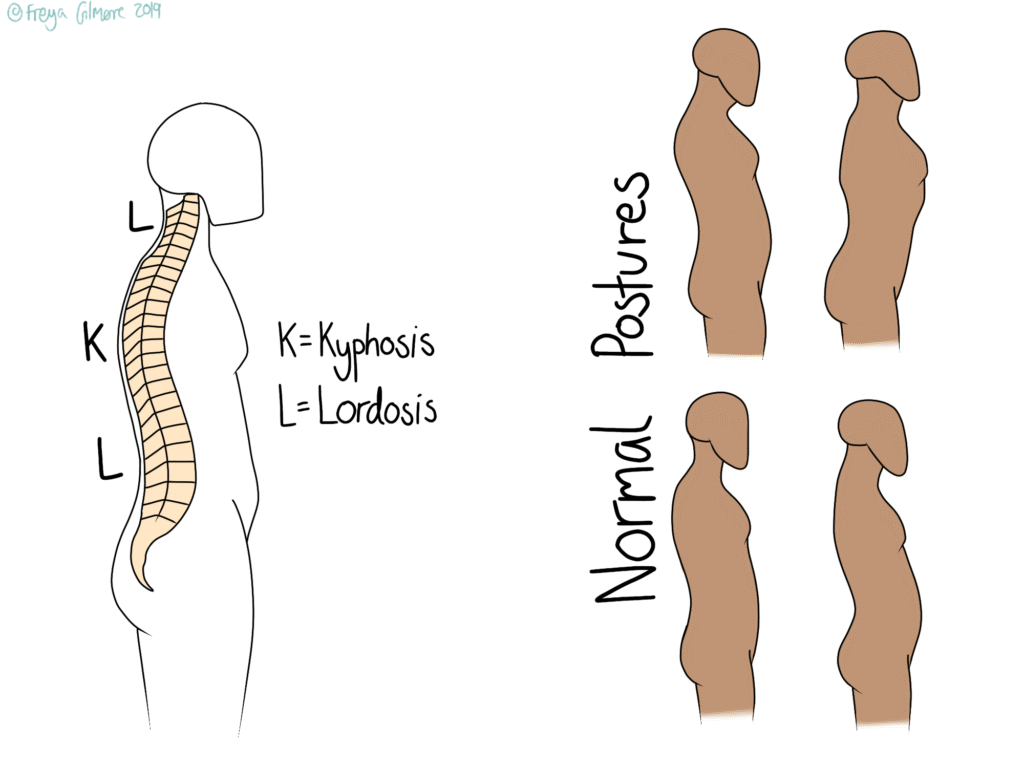
Technical terms for posture
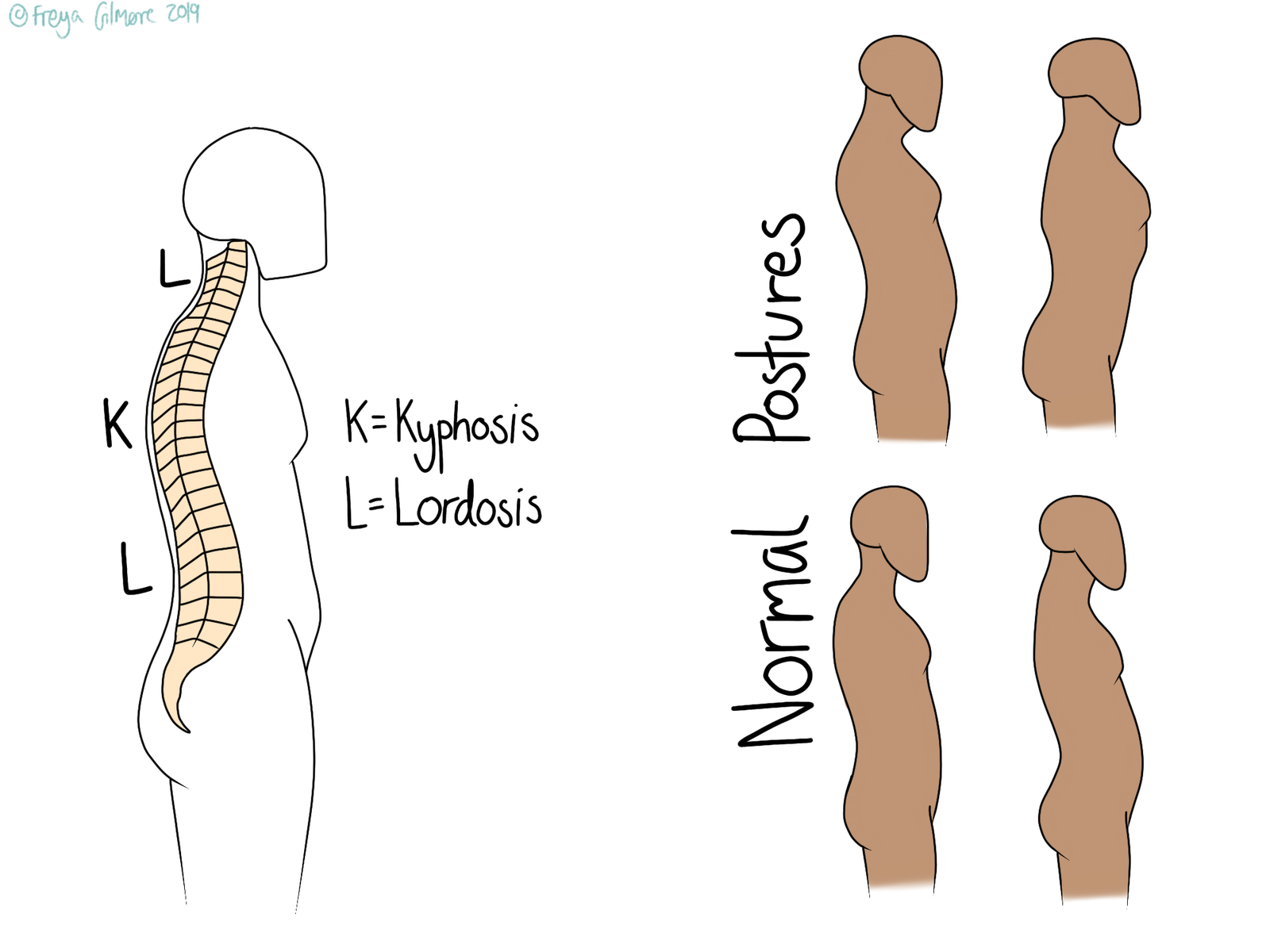
If you view the spine from the side you’ll see three curves. The neck and lower back curve forwards, and this is called a lordosis. The upper back curves backwards: this is a kyphosis. Sometimes these terms are used to suggest pathology, for example Scheuermann’s disease is sometimes referred to simply as kyphosis. But in the context of this post, they are simply the name of the curves in the spine.
Scoliosis
Scoliosis is different to the two terms above: this is a curve visible from standing behind. Again, this is normal for some people or can be pathological. No one is perfectly symmetrical, and if one of your legs is longer than the other, the body will compensate through the spine. Ultimately, you want your head to be level, so the body will make adaptations to support this.
Some people have scolioses that come and go. These are called “functional”. Typically they’re caused by a longer leg, and when you sit down, the curve will disappear. Alternatively, you could have a structural scoliosis. This remains regardless of your positioning, as the anomaly is within the spine itself. Typically, this would be an “S” shaped curve, although “C” shapes are possible. If the curves are identified in adolescence, your doctor may offer you a brace or surgery if your case is severe. More mild cases are often totally missed, as they don’t present any symptoms. The body is great at adapting to these things, but you might eventually get to a point where your scoliosis causes local or more widespread discomfort. This is when it’s more likely to be diagnosed. Although osteopaths can’t “fix” a structural scoliosis, we can work to make it easier for the body to adapt, and address areas of stiffness if appropriate.
Your Normal Posture
You might find that you have always sat or stood in a way that’s asymmetric or otherwise potentially “bad”, but asymmetry is normal and might be a red herring. What’s more likely to cause you a problem is a change to your usual demands, which might include changing from an active to sedentary lifestyle for example. If you change jobs and find yourself sitting at a desk or behind a steering wheel for 8 hours solid every day, that might be the sort of thing that causes you aches and pains. Sometimes these positions will be unavoidable but where possible, do make a point of sitting in a different way throughout the day. If it helps, you could look at standing desks or alternative seats.
Ergonomics
If the biggest problem is staying in one position for too long, then the easy solution is to make other positions available to yourself. This applies to not just work but sleeping, driving, or even sitting on the sofa. With a desk in mind you may find that having the ability to stand and work is more comfortable than sitting all day. That doesn’t have to mean “buy an expensive sit/stand desk”. Especially if you work from home, maybe you’d find that moving the laptop to the dining table or the kitchen worktop for half an hour at the time is enough to break up your day and keep you comfortable.
Click here to make an appointment in Camberley
Related Posts