Piriformis syndrome is a common cause of deep buttock pain and can sometimes produce symptoms…
Calcific Tendinopathy
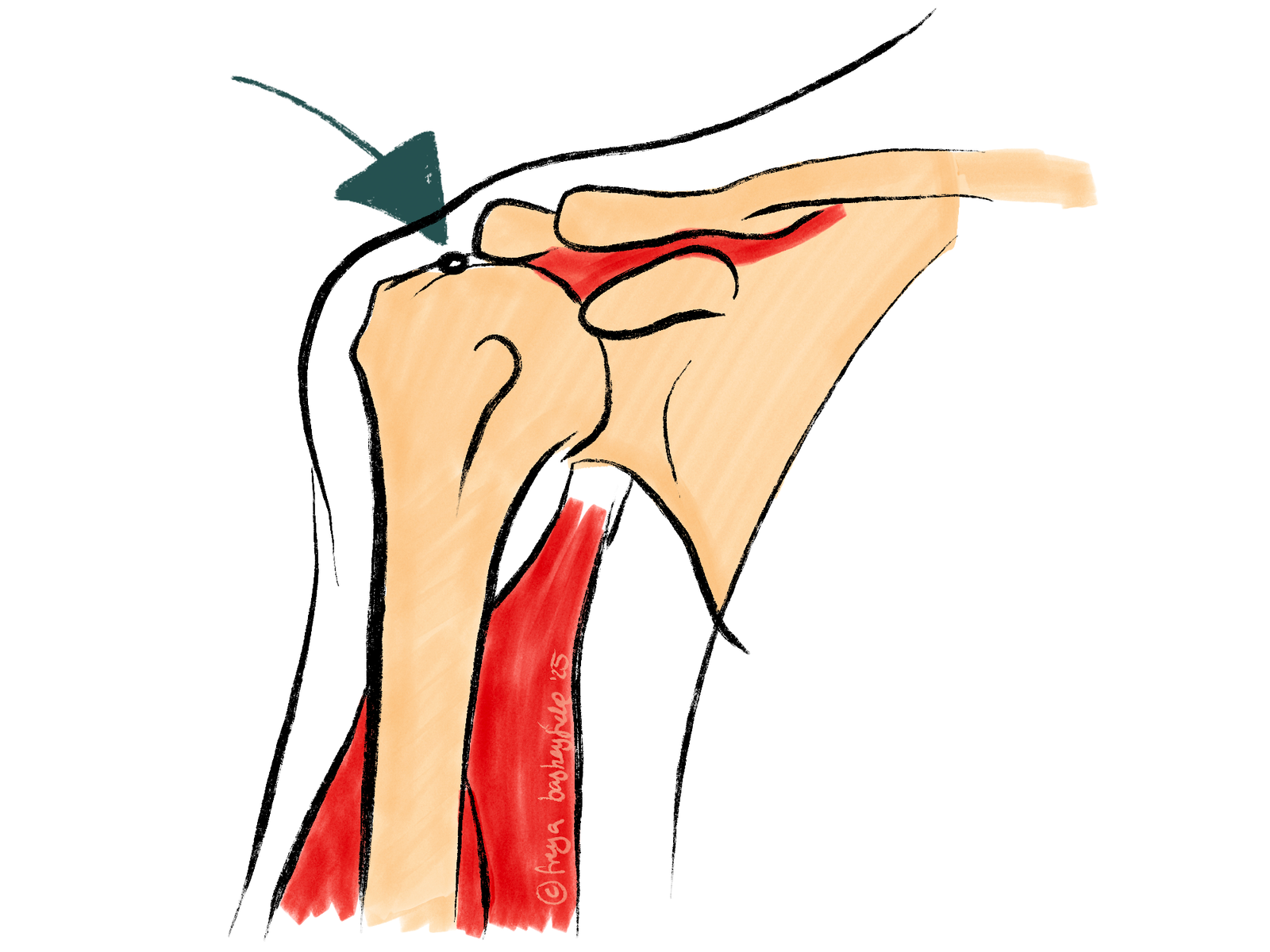
Shoulder pain can have many different causes, and they often produce very similar symptoms. It’s surprising how often shoulder pain focuses over the very tip of the shoulder, even when the cause is not particularly local to that spot at all. One diagnosis that can be overlooked is calcific tendinopathy. This condition occurs when calcium deposits develop within a tendon, most often in one of the rotator cuff muscles. Although it can be extremely painful, it is usually manageable with the right approach.
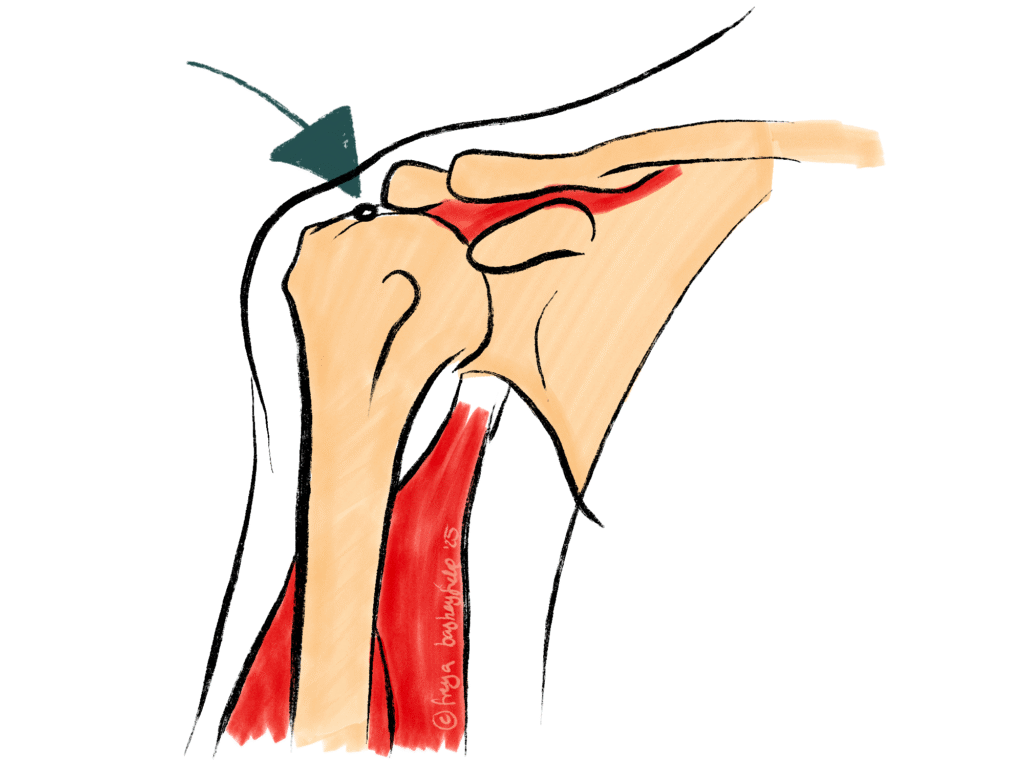
Because the symptoms overlap with several other shoulder conditions, a thorough assessment is important to determine what is causing your pain and whether further investigation is needed.
What is Calcific Tendinopathy?
Tendons attach muscles to bones, allowing force to be transferred as we move. Unlike bone, tendons should not normally contain calcium. In calcific tendinopathy, calcium crystals accumulate within the tendon, creating a deposit that may range from a few millimetres to several centimetres in size.
The exact reason this happens is still being researched. Rather than being simply “wear and tear”, current evidence suggests it is an active process in which the tendon changes before forming the calcium deposit. Interestingly, the body is also capable of reabsorbing these deposits over time, meaning the condition often follows distinct stages.
Many people have calcium deposits without ever knowing about them. Symptoms usually develop when the deposit irritates the tendon or enters a phase where the body begins to break it down.
Who Gets Calcific Tendinopathy?
Calcific tendinopathy most commonly affects adults between the ages of 30 and 60, with the highest incidence occurring in people in their 40s and 50s. It is more common in women than men, and the dominant shoulder is affected slightly more often.
Although anyone can develop the condition, it appears to occur more frequently in people with metabolic conditions such as diabetes or thyroid disorders. Repetitive overhead activities may contribute to symptoms, although they are not thought to be the sole cause.
Unlike osteoarthritis, calcific tendinopathy is not simply a consequence of ageing, and it is relatively uncommon in older adults.
Symptoms
Symptoms vary depending on the stage of the condition.
Some people experience a gradual ache around the shoulder that worsens with lifting or reaching overhead. Others develop sudden, severe pain that makes even simple movements difficult. As mentioned above, pain often sits on the tip of the shoulder. This may be worse with overhead movements and laying on that side. We expect movements to be restricted and weaker as a result. Because of the pain on laying on the affected shoulder, sleep can be disturbed too.
The pain can sometimes travel down the upper arm, making it easy to mistake for a neck problem or even thoracic outlet syndrome.
What Else Could It Be?
This is where assessment becomes particularly important. Calcific tendinopathy shares features with several other shoulder conditions, including:
- Rotator cuff strains or tears
- Subacromial bursitis
- Frozen shoulder
- Shoulder osteoarthritis
- Labral tears
- Pain referred from the neck
Because treatment differs between these conditions, identifying the correct diagnosis is essential. Imaging such as X-rays can often demonstrate calcium deposits clearly when required.
Osteopathy for Calcific Tendinopathy
Treatment focuses on improving the mechanical environment around the painful tendon while allowing healing to take place. Complete rest is rarely helpful, but repeatedly pushing through severe pain can prolong recovery.
Your osteopath will assess not only the shoulder itself, but also how the neck, upper back, shoulder blade, and rib cage are moving. Restrictions elsewhere can increase demand on the rotator cuff and contribute to ongoing irritation.
Treatment may include gentle manual therapy, rehabilitation exercises, advice on modifying activities, and progressive strengthening as symptoms improve. If your presentation suggests another diagnosis, or if imaging or medical intervention would be beneficial, your osteopath can advise on the next steps.
Click here for an appointment in Camberley
Related Posts