Few things are more difficult for parents than listening to a baby cry and not…
Piriformis Syndrome
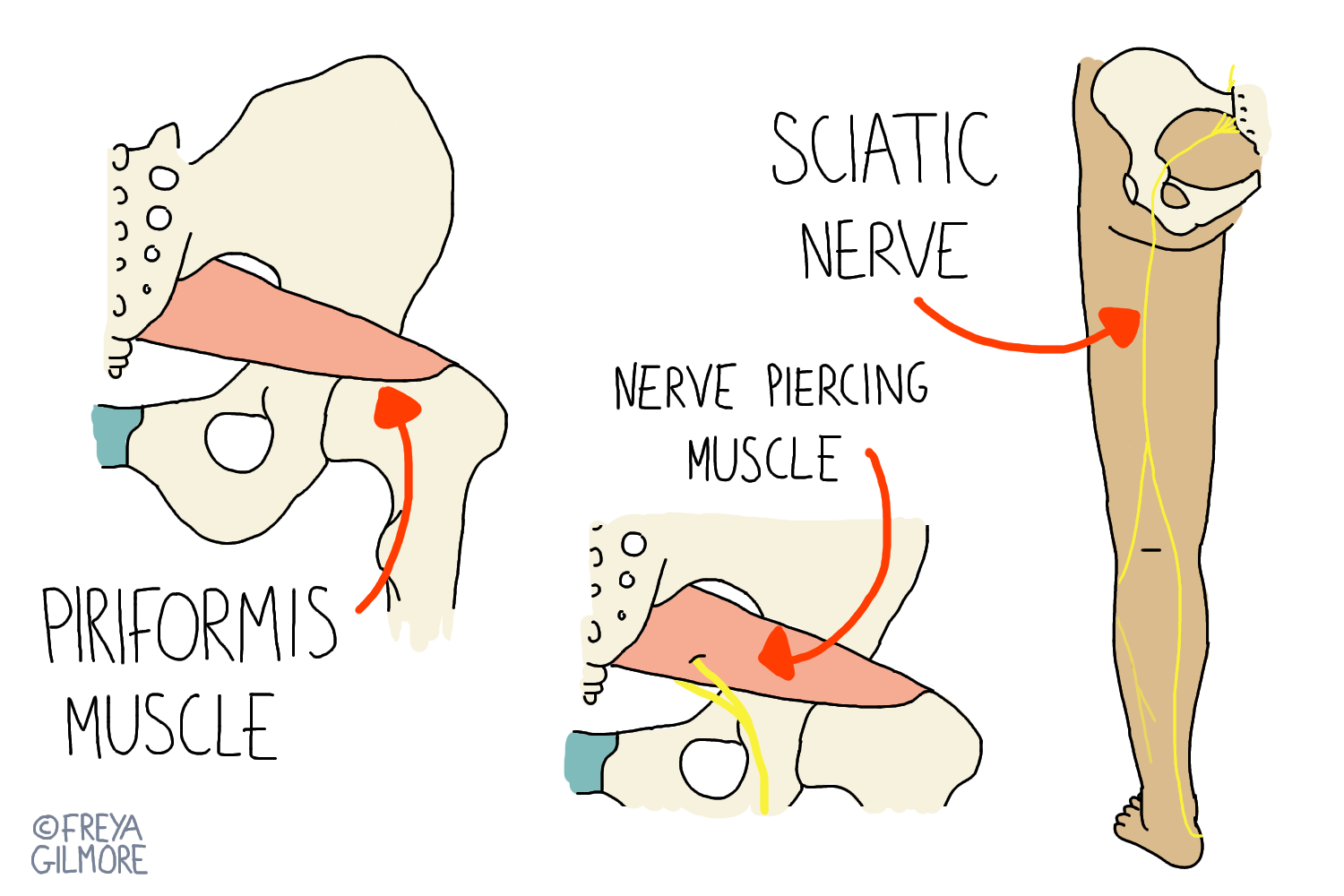
Piriformis syndrome is a common cause of deep buttock pain and can sometimes produce symptoms of sciatica. The piriformis is a small muscle deep within the buttock, running from the sacrum to the upper part of the thigh bone. It helps to rotate and stabilise the hip during movement.
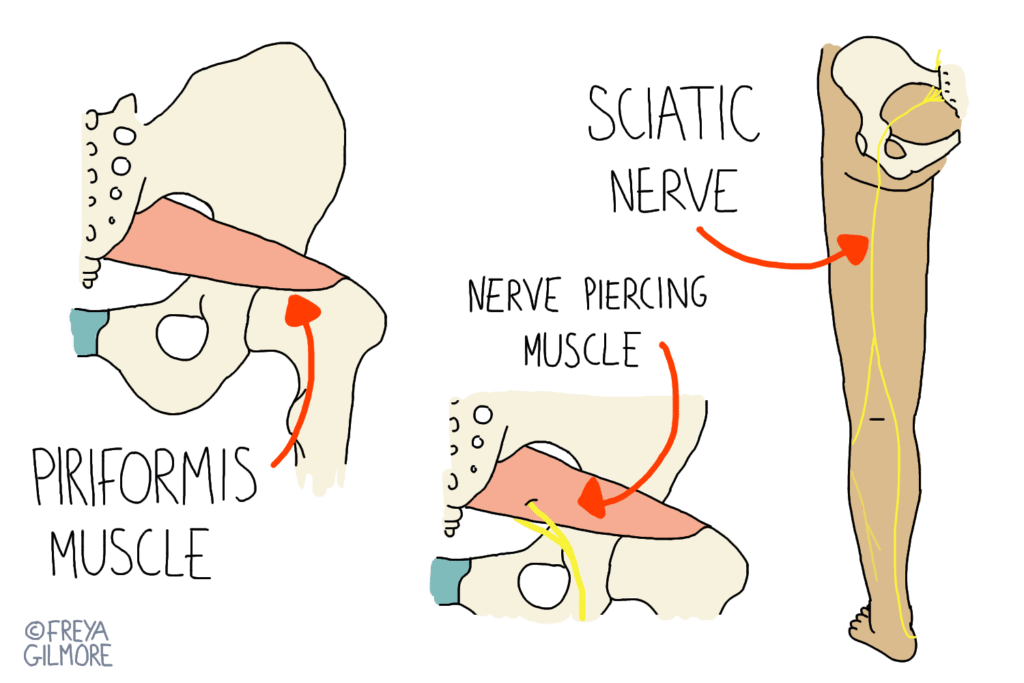
The sciatic nerve usually passes underneath the piriformis, but for some people it runs straight through the muscle. If piriformis becomes tight, overloaded or irritated, it can contribute to irritation around the nerve and cause pain further down the leg. “Sciatica” is simply a description of the symptoms of an irritated sciatic nerve. So piriformis syndrome is a form of sciatica. Often, sciatica symptoms are caused by an issue in the lower back, such as a bulging disc. Discs can take a long time to make positive progress, and the pain can last for a long time. But often when the cause is just a tight muscle, it responds much quicker.
What does piriformis syndrome feel like?
Symptoms can include a deep ache in the buttock, pain travelling into the back of the thigh and sometimes further down the leg. The leg pain is usually a sharp pain along a very defined line, but there may also be a pins and needles type pain, or otherwise altered sensation.
Sitting for long periods can be particularly uncomfortable, while running, climbing stairs or hills and movements involving hip rotation may aggravate symptoms. That might include getting in and out of the car, or kicking a ball to name a couple of examples.
Why does piriformis syndrome develop?
A change in activity is a common trigger. Increasing running distance or frequency, returning to sport after a break, starting a new training programme or suddenly increasing the intensity of exercise can all place greater demands on the muscles around the hip. This is particularly relevant when the increase happens faster than the body can adapt.
The piriformis can also become part of a wider mechanical pattern. Lower Cross Syndrome, for example, describes a pattern involving the muscles around the hips and lower back, with changes in muscle length and strength potentially affecting pelvic position and movement. Again, it’s not a diagnosis in itself, but considering these wider relationships can be useful when assessing persistent buttock or lower back symptoms.
Piriformis syndrome during pregnancy
Pregnancy can create another change in the mechanical demands placed on the pelvis and hips. As the baby grows, the centre of gravity moves forwards and posture and movement naturally adapt. The gluteal muscles and other stabilisers around the pelvis may consequently work differently, sometimes increasing tension through the buttock.
Not every pregnancy-related buttock or leg pain is piriformis syndrome, however. Symptoms should be assessed carefully, particularly if they are severe, progressive or accompanied by significant neurological symptoms.
How can osteopathy help?
Your osteopath will assess the lower back, pelvis, hip and surrounding muscles rather than concentrating solely on the piriformis. Treatment may aim to improve restricted movement and reduce unnecessary muscular tension, alongside exercises to improve hip strength and control.
If symptoms have followed a change in sport or training, looking at training load and recovery is also important. You may not need to stop exercising altogether; modifying the activity while symptoms settle can often be a more useful approach.
Make an appointment for your buttock or leg pain in Camberley here
Related Posts